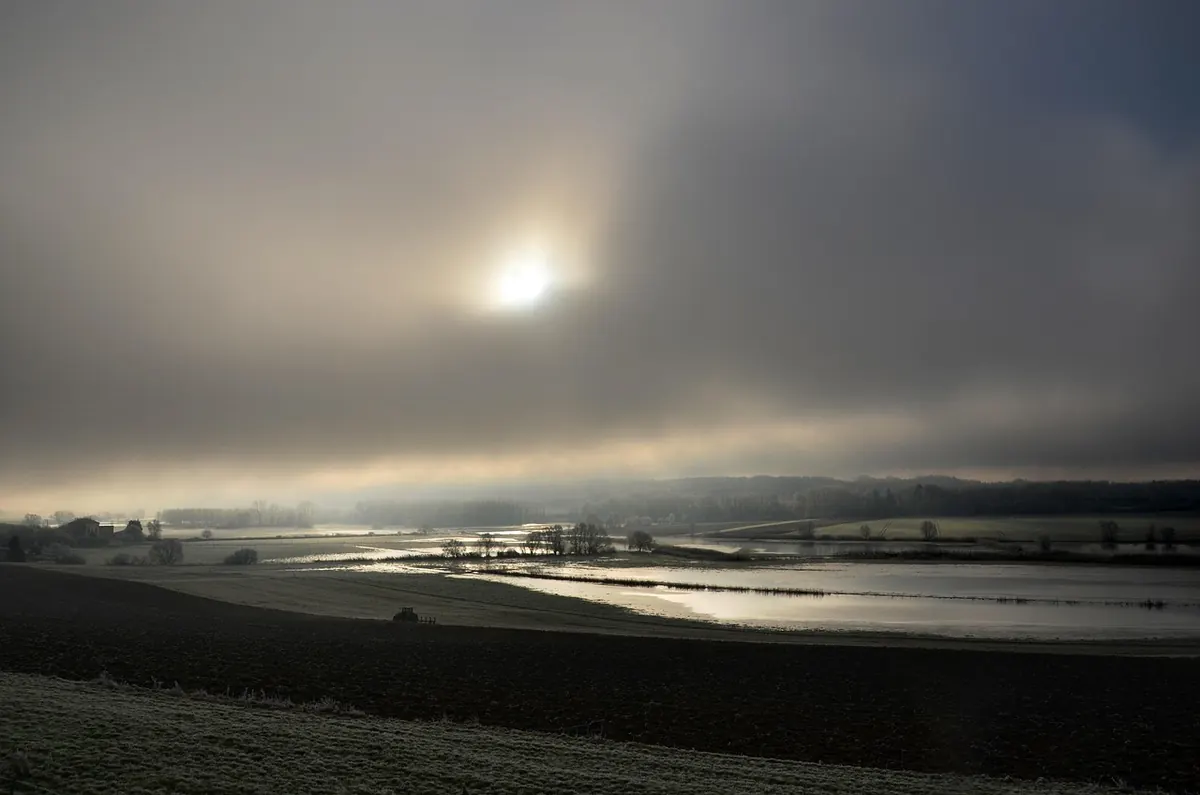
By January the fields either side of the Brue are more water than grass. The rhynes fill, the peat darkens, and the reedbeds between Glastonbury and Wedmore turn into a wet, wind-scoured place that suits birds down to the ground. That is the appeal for a birder: everything is concentrated. You are not walking five miles for a glimpse of something. You are standing on a level path with a flask, watching a bittern row itself across a gap in the reeds.
Why the Somerset Levels Deliver in Winter
Three things work in your favour. First, the flooded grassland pushes wildfowl and waders off the huge, unviewable fields and into smaller pools you can actually scan. Second, the shallow peat lakes and reedbeds rarely freeze solid, so when inland reservoirs are locked up, the Levels stay open. Third, the bare hedges and low light mean birds that skulk in summer are far easier to see. A Cetti's warbler shouting from a bramble is one thing; a Cetti's warbler hopping along a hedge bottom in December is quite another.
The mild, damp climate helps too. Mild winters here are good for water pipits and lingering chiffchaffs, and the reedbeds keep enough insect life to hold bearded tits and a few dozen species of wildfowl through to March.
The Avalon Marshes: Three Reserves, One Lane
Most winter trips can be built around the Avalon Marshes, where Ham Wall, Shapwick Heath and Westhay Moor sit within a few miles of one another. You can do two in a day without moving the car far.
Ham Wall (RSPB)
Start here if you want easy walking and reliable birds. The main path from the car park is level and firm, suitable for wheelchairs and pushchairs, and the hides along it look out over open water and reedbed. Tor View Hide is the closest and often the busiest; push on to the further hides if you want quiet. Great white egrets are now a fixture rather than a surprise, and marsh harriers quarter the reeds all day. Arrive early for bitterns — the reed edge at first light is where they show, before they melt back into cover.
Shapwick Heath (National Nature Reserve)
The old railway line gives you a straight, firm track with water on both sides, which is a gift in a wet winter. Noah's Lake and Meare Heath hold the biggest gatherings of duck: wigeon, teal, shoveler, gadwall and the odd pintail. The paths off the main track get muddier and can flood after heavy rain, so check conditions before committing to a long loop. Tower Hide is the one to aim for if you want a wide view over the wet meadows.
Westhay Moor (Somerset Wildlife Trust)
The quietest of the three and the best for a slow, deliberate sit. The hides overlook open water fringed with willow and reed, and it is a good place to catch water rail, snipe and, if you are lucky, an otter. Bring wellingtons — the trails here are peaty and hold water.
Farmland, Coast and the Wider Levels
If you have a second day, head for the wet grassland reserves. Catcott Lows and Greylake sit either side of the Polden ridge and both have hides looking over flooded pasture, which is where winter swans, white-fronted geese and flocks of lapwing and golden plover turn up. Greylake is a decent bet at dusk for short-eared owl and a late-flying hen harrier.
For something completely different, drive to Steart Marshes and Bridgwater Bay, where the Levels meet the Bristol Channel. It is exposed and cold, but the high-tide roosts are excellent: shelduck, dunlin, knot, avocet and a peregrine working the edges. The reintroduced cranes roam widely across the moors; West Sedgemoor and the wet meadows north of the Avalon Marshes are your best chance of finding them.
Winter Specialities and Where to Find Them
- Bittern — reedbed edges at dawn and dusk, especially Ham Wall and Westhay Moor. Listen for the deep boom from late winter onwards.
- Great white egret — widespread now, often feeding in the open on flooded fields.
- Marsh harrier — hunting over reedbeds throughout the day; Hen harrier more often at dusk on the grassland reserves.
- Bearded tit — reedbeds at Ham Wall and Shapwick Heath. Best on still, sunny mornings when they come up to the tops of the stems.
- Water pipit — wet pool edges and muddy margins; scan carefully among meadow pipits.
- Winter swans and geese — Catcott Lows and the West Sedgemoor meadows. Whooper swans are regular; Bewick's have become rare.
- Starling murmuration — the reedbeds at Ham Wall, November to February. Tens of thousands of birds, sometimes more.
- Short-eared owl — Greylake, Catcott and Steart, from mid-afternoon.
Timing a Winter Day
- First light: be in position at a reedbed edge before sunrise. Bitterns, otters and the first harriers all move in that first half hour.
- Mid-morning: walk the main track and work the hides as the light lifts. This is when wildfowl counts are easiest and photography is at its best.
- Early afternoon: eat, thaw out, and drive to a second site. Days are short — do not over-plan.
- An hour before sunset: be at Ham Wall for the murmuration, or at Greylake or Catcott for owls and harriers. Arrive early; the good spots fill up.
- Last light: stay put for ten minutes after the main event. Late bitterns and raptors often move as the light goes.
Practicalities for a Winter Visit
Wear wellingtons or good waterproof boots, not trail shoes. Even the firm paths have wet sections, and the side trails hold water for weeks. Take a torch or headtorch for the walk back from a dusk hide, spare batteries for the camera in the cold, and a flask — there is very little in the way of shops or cafés once you are out on the moors.
Days are short, so build in slack and check the light rather than the clock: sunset in mid-December is around four in the afternoon. After prolonged rain, some lanes near Westhay, Meare and Catcott flood, so check local road conditions before setting out, and never attempt a flooded road. Entry to these reserves is free, though car park donations and membership support the work; facilities are limited, with Ham Wall the most reliable for a toilet stop. If you are bringing a dog, check the current policy for each reserve before you travel, as rules vary and some paths are closed to dogs entirely. And tell someone where you are going — the Levels are remote, mobile signal is patchy, and a quiet winter afternoon can turn cold very quickly.
Photo: ybernardi / Pixabay