Feeding the birds is the easy part. Turning a garden into somewhere birds can feed, drink, bathe, shelter and raise young is a slightly bigger job — and the useful thing is that it runs on a calendar you already know. The work is small and seasonal: a cleaned feeder here, a handful of sunflower hearts there, a shrub planted in the right month that feeds blackbirds for a decade. Here is a working checklist for the year, arranged so you do the right job at the right time and leave the rest alone.
The three things every garden needs
Food, clean water and cover. Everything else is refinement. Get those three right across twelve months and your garden will do more for birds than a smarter one stocked with feeders and nothing else.
Food
Variety beats volume. A mix of sunflower hearts, nyjer, suet and a few mealworms suits most of what visits a British garden: goldfinches and siskins on the nyjer, tits and nuthatches on the hearts, robins and blackbirds on suet and live food. Skip mouldy seed, and skip bread — it fills a bird up without feeding it. If a feeder sits untouched for weeks, the seed is probably stale or the position feels exposed. Move it, wash it and start again.
Water
A shallow dish, refreshed daily, is worth more than half the feeders on the shelf, especially in a freeze or a dry spell. Keep it around 5cm deep or less, add a couple of stones or a gentle ramp so nothing drowns, and site it where a cat cannot creep up unseen. Scrub it every few days in warm weather.
Cover
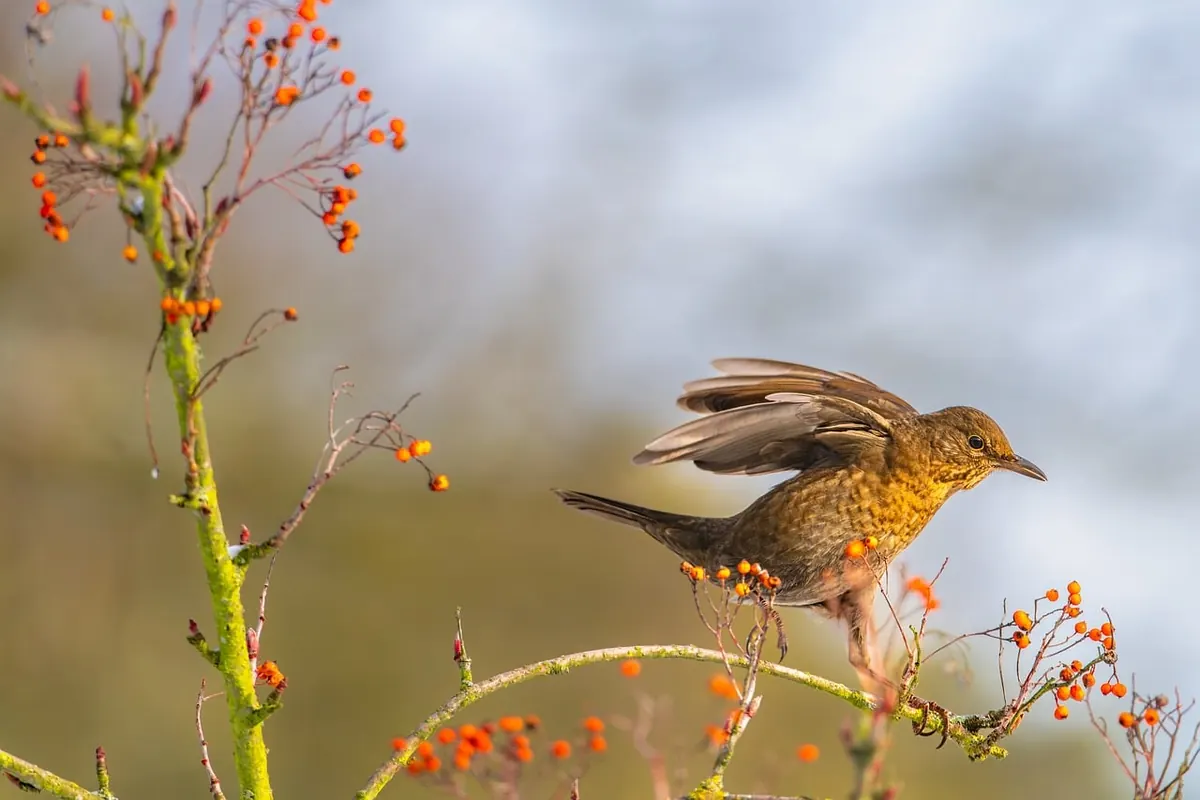
A lawn, a fence and a feeder attract birds to visit. A hedge, a few native shrubs and an untidy corner attract birds to live. Hawthorn, blackthorn, rowan, hazel, holly, honeysuckle and ivy all support insects, and insects are what chick-rearing depends on. Leave seed heads standing through winter and let a patch of leaf litter and dead wood rot quietly in a corner. Every caterpillar you do not spray away is a meal for a blue tit's brood.
Spring: March to May
This is the season when good intentions do damage. Nest boxes should already be up by now — facing somewhere between north and east, two to four metres off the ground, clear of easy cat access. From March onwards, leave them alone. An inspection at the wrong moment can make a pair desert a box.
Swap whole peanuts for granules, suet or mealworms. Adult birds handle peanuts perfectly well, but a whole nut carried straight to a box is a choking risk for a nestling. Mealworms, dried or live, are the single most useful thing you can offer in May, when wet weather leaves caterpillars scarce.
Do not cut hedges or hard-prune thick shrubs now. Nests in use are protected by law, and quite apart from that, you do not want a half-grown brood on the ground because a branch moved. Wait until late August.
Summer: June to August
Natural food is everywhere, so a quiet feeder is not a problem — birds are busy on caterpillars, aphids and berries. Your job shifts to hygiene and water. Warm weather speeds up how quickly food spoils and how easily disease spreads at a crowded feeder. Clean feeders about once a fortnight, more often in heat or when they are busy. Use a brush, hot soapy water and a bird-safe disinfectant, then dry everything properly before refilling.
If you see a bird sitting fluffed up and slow, or one that seems to be struggling to swallow, take the feeders down, clean them and leave them down for a couple of weeks. Diseases such as trichomonosis spread quickly where finches gather. Keep the water fresh and report what you see to a wildlife organisation if you can.
Give second-brood boxes plenty of room, and keep an eye on the bird bath — fledglings are clumsy bathers.
Autumn: September to November
Plant now and clean now. Bare-root trees and shrubs go in from November while they are dormant, which is the cheapest and most reliable way to establish native hedging and berry-bearing shrubs.
Clean out nest boxes once you are certain they are empty. Remove old nests and any parasites, scrub with boiling water rather than chemicals, let the box dry completely, and check the fixings. Repair a dripping roof — a wet box is a cold box — and replace any missing predator guard around the entrance hole.
Then resist the urge to tidy. Seed heads feed goldfinches through the winter, and a leaf pile is a hedgehog's business, not yours.
Winter: December to February
Cold snaps are when supplementary food matters most, and consistency counts as much as quantity. Birds learn where food appears and plan their day around it, so keep to roughly the same times: a fill in the early morning and a top-up in the early afternoon suits long, cold nights well.
High-fat foods and sunflower hearts come into their own now. Water matters just as much, because birds need to drink and bathe even when the ground is frozen. Pour a little warm — never hot — water into the dish each morning, and float a small ball in it to slow refreezing.
Leave the garden untidy. Dense evergreens, ivy, log stacks and shed eaves are roosts; wrens, long-tailed tits and the occasional blackcap will use them.
A month-by-month quick reference
- January–February: keep feeders full, break ice daily, put up new nest boxes before the end of the month.
- March–April: stop inspecting boxes, switch from whole peanuts to granules or suet, leave hedges alone.
- May–June: offer mealworms, keep water topped up, keep disturbance near boxes to a minimum.
- July–August: clean feeders fortnightly, watch for sick birds, wait until late August to cut hedges.
- September–October: empty and scrub nest boxes, order bare-root shrubs, leave seed heads standing.
- November–December: plant bare-root hedging, deep-clean feeders, top up food before dusk.
Start with two jobs, not twenty
One clean, well-sited feeder and a dish of fresh water every day will do more than a full shed of equipment visited once a fortnight. If you are beginning now, those are the two habits to build first.
It also helps to write things down. A small notebook recording the first goldfinch on the nyjer, the first blue tit carrying moss, the first fledgling gives you a baseline — and a baseline is how you tell whether your garden is improving. If you want the records to count for something beyond your own satisfaction, log them with a national garden bird survey; the sightings are used for conservation.
Finally, talk to your neighbours. One garden is a patch; four gardens with gaps at the bottom of the fence are a corridor. Persuading next door to hang a box or leave a hedge alone often achieves more than any feeder you could buy.
Photo: RoyBuri / Pixabay