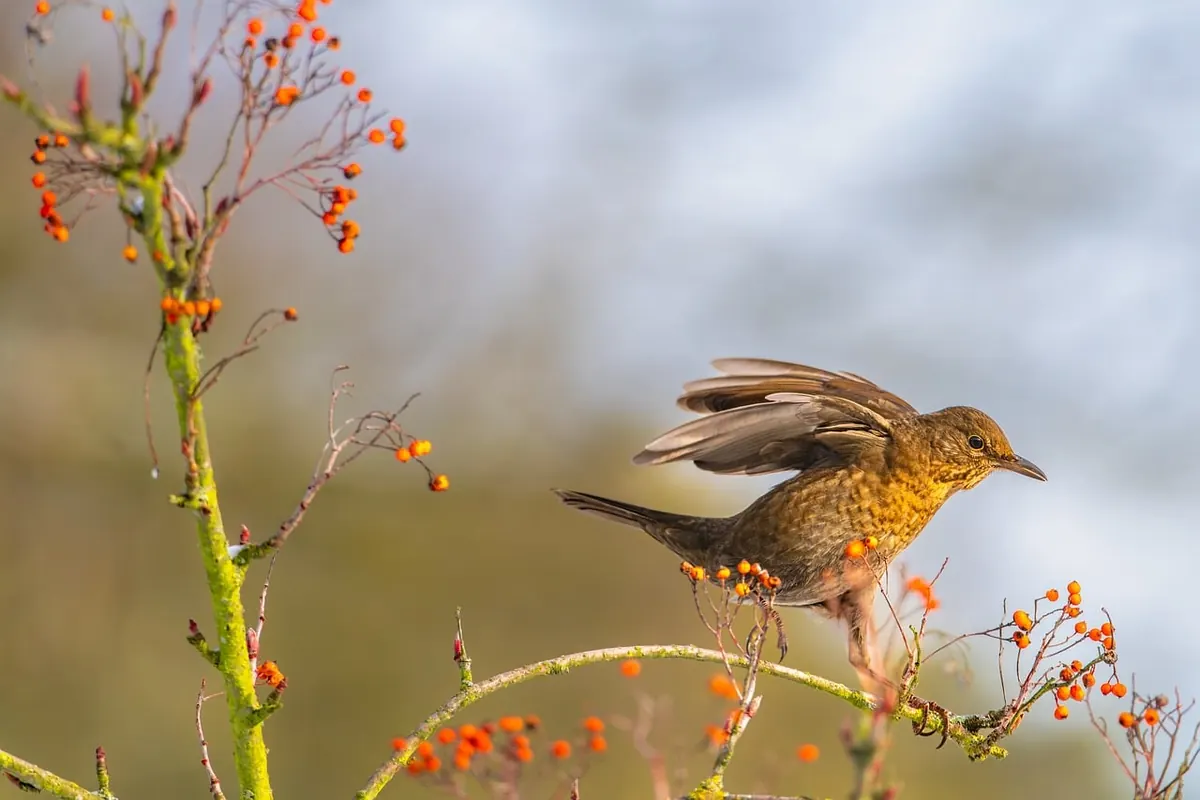
The first bird you really look at is usually something ordinary: a blue tit on a feeder, a blackbird flicking leaves across a lawn, a heron standing in a ditch as though it has been there for a century. Something about the way it moves makes you stop and watch properly. That moment — when a bird stops being background and becomes a bird — is the whole hobby in miniature. The rest is learning where to be, what to carry, and how to watch without disturbing what you have come to see.
Good news: starting costs very little, and this weekend will do.
Kit: begin with what is already in the cupboard
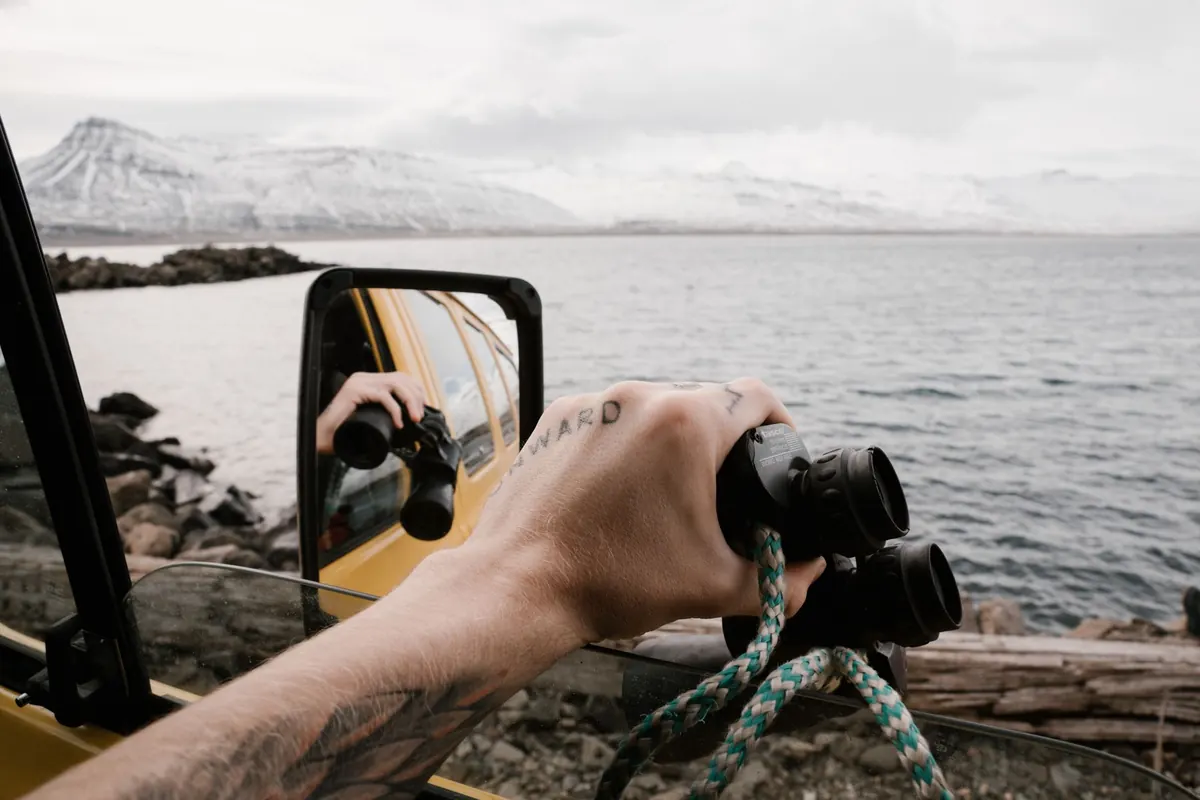
Ignore the photography forums and the people with tripods the size of fence posts. For your first few months you need very little, and binoculars — the only purchase that really matters — can wait until you have borrowed a pair or tried several at an optics day.
- Notebook and pencil. Pencil, not pen: it writes in the rain and does not smudge when your hands are damp.
- A field guide. One good British or European guide is plenty. Learn to use the index by family, not just by picture.
- Clothing in dull colours. Olive, brown, grey. Avoid rustling waterproofs and anything that flaps.
- Sturdy boots and a waterproof layer. Wet feet end more trips than bad weather does.
- A flask. Mornings are cold, and sitting still in a hide is where the good sightings happen.
Add insect repellent in summer, a hat, and a small torch in winter. A bird app on your phone is useful, but treat it as a backup to the guide rather than a replacement.
Binoculars without the buyer's panic
Binoculars are described by two numbers. In 8x42, the 8 is magnification and the 42 is the diameter of the front lens in millimetres. The second number governs how much light they gather, which matters at dawn and dusk; the first governs how close the view is.
For general British birdwatching, 8x42 is the sensible default. Ten-power glasses sound impressive but are harder to hold steady and slower to find a moving warbler with. Avoid anything sold with an extreme zoom range, and consider secondhand: a used pair from a reputable optics retailer will usually beat a new pair at the same price. When you try some, check four things:
- Can you hold them comfortably for a minute without your arms trembling?
- Does the focus wheel turn smoothly, using one finger?
- Is the image a single circle, rather than two overlapping ones?
- Are the edges of the view reasonably sharp, not just the centre?
Keep the strap round your neck and clean the lenses with a proper cloth, never a sleeve.
Fieldcraft: seeing more by doing less
Most beginners walk too fast and talk too loud. Birds pick up movement and shape long before they hear you, and the two best habits are simple: move slowly and stop often.
Listen as much as you look. In woodland or hedgerow, most birds are heard before they are seen, and learning half a dozen calls — robin, wren, great tit, blue tit, blackbird alarm, woodpigeon — will change what you find. Walk with the sun behind you where you can, and approach water or open ground from cover rather than along the skyline.
Birding has one firm rule. Wild birds, their nests and eggs are protected by law in the UK, and disturbance in spring can cause a nesting attempt to fail. If you find a nest, watch briefly from a distance and move on. Keep dogs on leads near nesting habitat, and do not use recordings to pull scarce birds into view.
Learn a dozen birds properly
Beginners who try to identify everything at once get nowhere. Choose ten or twelve common species and learn them until you recognise them instantly. A useful starter list:
- Blue tit, great tit, coal tit, long-tailed tit
- Robin, wren, dunnock, blackbird
- Chaffinch, goldfinch, greenfinch
- Woodpigeon, carrion crow, magpie
- Mallard, moorhen, coot, Canada goose
Watch shape and behaviour before colour. The way a bird sits, feeds and moves — birders call it jizz — is often more useful than plumage, particularly in poor light or against a bright sky.
Adopt a local patch
A patch is a place within walking distance that you visit regularly: a park with a pond, a canal towpath, a cemetery, a stretch of estuary, an old railway line. Familiarity is the point. You learn what is normal there, so you notice immediately when something is not.
Go at least once a week, follow broadly the same route, and note the date, weather, species and rough numbers. Patterns appear within a season. Local bird clubs, and recording schemes run by the British Trust for Ornithology, welcome beginners' records; county recorders use them to track how birds are faring.
Making a garden count
A garden, balcony or window feeder is a legitimate patch. Provide clean water, keep feeders clean, and leave a corner untidy for insects. Native plants and a little dense cover will do more for birds than any amount of hanging plastic.
Your first trip to a nature reserve
Pick somewhere with a visitor centre, a hide or two and a sightings board: an RSPB reserve, a Wildlife Trust site, a wetland centre or a country park with water. Check opening times and parking before you set off, and if you are heading to the coast, check the tide table — on estuaries, the birds move with the water.
Arrive early. The first two or three hours after dawn are the busiest, and the light is at its best. Once you are in a hide, sit still and be patient; birds that scattered when you arrived will drift back within ten minutes if you stay quiet. Keep your voice low, do not tap the glass, and do not block the windows for other people. If a warden or volunteer is around, ask what has been seen recently — that one conversation is often worth more than an hour of guessing.
A simple first month
Week one: list the birds in your street or garden, ten species will do. Week two: borrow or try binoculars and learn four common calls. Week three: visit a reserve and spend an hour in one hide. Week four: choose your patch and start a notebook.
After that, the pace is yours. Join a local bird club, go on a guided walk, and ask questions — birdwatchers are, on the whole, a generous crowd. The skills build quietly, and one morning you will name something without thinking about it, and realise how much you have learned.
Photo: Grey85 / Pixabay